Humane
Future
Ecologies
Humane
Future
Ecologies
The Ecology of the Interval.
Where we meet ourselves
in the space between.
Humane
Future
Ecologies
The Ecology of the Interval.
Where we meet ourselves
in the space between.
9:24:59 PM
9:24:59 PM
Your Present
Your Present
The place where
futures are woven
The place where
futures are woven
The place where
futures are woven
Before an idea becomes a technology, product or system, a world has already begun to take form. It is woven from assumptions about people, the relationships between them,
and the life that will unfold around it.
Humane Future Ecologies™ explores this living interval, where ideas, technologies and living environments shape one another and worlds are woven into experience. Since 2009, this inquiry has moved through cities, products, universities and public discourse, returning to the same question:
How does what we create create us back?
Before an idea becomes a technology, product or system, a world has already begun to take form.
It is woven from assumptions
about people, the relationships between them, and the life that will unfold around it.
Humane Future Ecologies™
explores this living interval,
where ideas, technologies and living environments shape one another and worlds are woven into experience.
Since 2009, this inquiry has moved through cities, products, universities and public discourse, returning to the same question:
How does what we create create us back?
Before an idea becomes a technology, product or system, a world has already begun to take form. It is woven from assumptions about people, the relationships between them,
and the life that will unfold around it.
Humane Future Ecologies™ explores this living interval, where ideas, technologies and living environments shape one another and worlds are woven into experience.Since 2009, this inquiry has moved through cities, products, universities and public discourse, returning to the same question: How does what we create create us back?
Environments emerge through relationships
Environments emerge through relationships
Environments emerge through relationships
Some unfold between people. Others between worlds.
Two living ecologies.
Some unfold between people. Others between worlds.
Two living ecologies.

Inter-Human
Experience™
A living field, the place where the self meets itself, and recognizes another.
Inter-Human
Experience™
A living field, the place where the self meets itself,
and recognizes another.
Inter-Human
Experience™
A living field, the place where the self meets itself, and recognizes another.
Inter-
Ecology™
A living field, the space where ecologies touch, respond, and reshape one another.
Inter-
Ecology™
A living field, the space where ecologies
touch, respond, and reshape one another.
Inter-
Ecology™
A living field, the space where ecologies touch, respond, and reshape one another.
Every world leaves conditions
for another to grow
New relationships can open new ways of living
New relationships can open new ways of living

Imagine these principles taking shape in the world becoming places people can help define, shape and bring to life together
Imagine these principles taking shape in the world becoming places people can help define, shape and bring to life together


From vision to practice
From vision
to practice
In 2015, Alexandra Oxenoid founded The CityMakers an early urban innovation model and platform built around a vision of the city as a shared living environment, shaped with its residents.
Through a pilot in Holon, with the Rask-Agrobank community and the participation of the Municipality of Holon, the platform connected residents, local institutions and municipal actors around shared initiatives, volunteering and everyday urban life.
The CityMakers gave early form to an approach that would become more widely recognised in the years that followed: the city as a place people create together.
In 2015, Alexandra Oxenoid founded The CityMakers an early urban innovation model and platform built around a vision of the city as a shared living environment, shaped with its residents.
Through a pilot in Holon, with the Rask-Agrobank community and the participation of the Municipality of Holon, the platform connected residents, local institutions and municipal actors around shared initiatives, volunteering and everyday urban life.
The CityMakers gave early form to an approach that would become more widely recognised in the years that followed: the city as a place people create together.
In 2015, Alexandra Oxenoid founded The CityMakers an early urban innovation model and platform built around a vision of the city as a shared living environment, shaped with its residents.
Through a pilot in Holon, with the Rask-Agrobank community and the participation of the Municipality of Holon, the platform connected residents, local institutions and municipal actors around shared initiatives, volunteering and everyday urban life.
The CityMakers gave early form to an approach that would become more widely recognised in the years that followed: the city as a place people create together.
A practice
shaped over time

Alexandra Oxenoid, founder of Humane Future Ecologies™, explores how ideas become living environments and who we become within them.
For more than fifteen years, this inquiry has taken shape through products, the civic initiative The CityMakers, university teaching and public writing. Her work in strategy and design has cultivated an attention to what is already woven into things before we take them for granted: assumptions about people, possibilities for connection and ways of living.
Humane Future Ecologies™ grew from this practice to open an interval in which we can examine what is emerging around us and participate in shaping it. Before the future has a name or a form, there is still room to ask what kind of life we want to grow here.
A practice
shaped over time
A practice
shaped over time
Alexandra Oxenoid, founder of Humane Future Ecologies™, explores how ideas become living environments and who we become within them.
For more than fifteen years, this inquiry has taken shape through products, the civic initiative The CityMakers, university teaching and public writing. Her work in strategy and design has cultivated an attention to what is already woven into things before we take them for granted: assumptions about people, possibilities for connection and ways of living.
Humane Future Ecologies™ grew from this practice to open an interval in which we can examine what is emerging around us and participate in shaping it. Before the future has a name or a form, there is still room to ask what kind of life we want to grow here.
Inquiries
How are the ecologies of our relationships changing?
Inquiries
How are the ecologies of our relationships changing?
Inquiries
How are the ecologies of our relationships changing?
The first generation to score lower
than their parents born into screens,
now beginning to step out of them.
What happens when attention
becomes the new economy?
Brain Capital
LinkedIn
AI is beginning to translate the language of animal companions, prompting a deeper question, not what they might say to us, but whether we know how to listen.

What if we could ask our dog what he dreams of at night?
Globes Weekend Magazine, print · August 2026
The first generation to score lower
than their parents born into screens,
now beginning to step out of them.
What happens when attention
becomes the new economy?Brain Capital
LinkedIn
AI is beginning to translate the language of animal companions, prompting a deeper question, not what they might say to us, but whether we know how to listen.
What if we could ask our dog what he dreams of at night?
Globes Weekend Magazine, print · August 2026
The first generation to score lower
than their parents born into screens,
now beginning to step out of them.
What happens when attention
becomes the new economy?Brain Capital
LinkedIn
AI is beginning to translate the language of animal companions, prompting a deeper question, not what they might say to us, but whether we know how to listen.
What if we could ask our dog what he dreams of at night?
Globes Weekend Magazine, print · August 2026
The first generation to score lower
than their parents born into screens,
now beginning to step out of them.
What happens when attention
becomes the new economy?Brain Capital
LinkedIn
AI is beginning to translate the language of animal companions, prompting a deeper question, not what they might say to us, but whether we know how to listen.
What if we could ask our dog what he dreams of at night?
Globes Weekend Magazine, print · August 2026
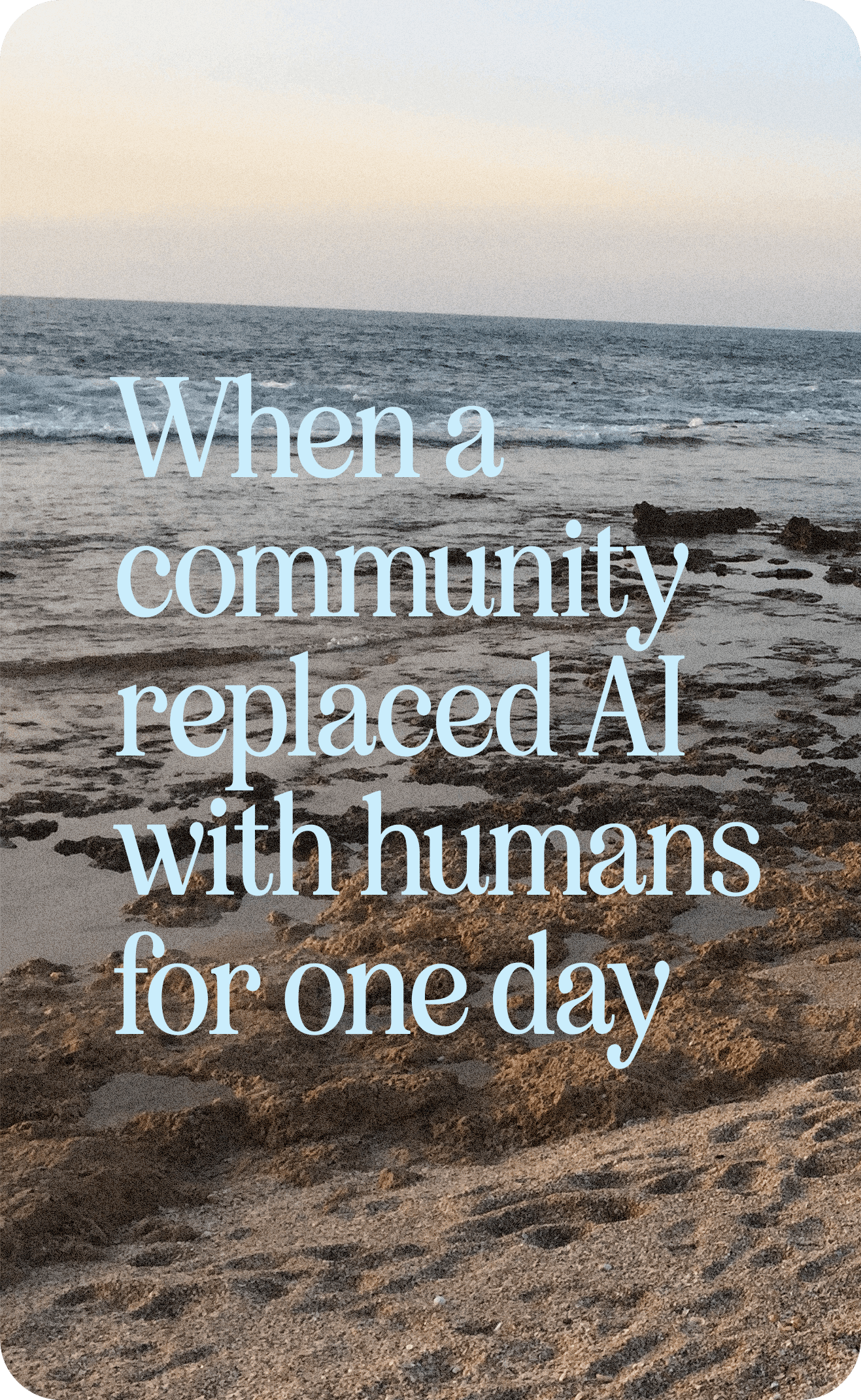

Revealing the Human Layer
What if we could ask our dog what he dreams of at night? AI is beginning to translate the language of animal companions, prompting a deeper question, not what they might say to us, but whether we know how to listen.
Anemoia
Globes Weekend Magazine, print · August 2026

The first generation to score lower
than their parents born into screens,
now beginning to step out of them.
What happens when attention
becomes the new economy?LinkedIn
LinkedIn
Revealing the Human Layer
What if we could ask our dog what he dreams of at night? AI is beginning to translate the language of animal companions, prompting a deeper question, not what they might say to us, but whether we know how to listen.
Anemoia
Globes Weekend Magazine, print · August 2026
The first generation to score lower
than their parents born into screens,
now beginning to step out of them.
What happens when attention
becomes the new economy?LinkedIn
LinkedIn
Revealing the Human Layer
What if we could ask our dog what he dreams of at night? AI is beginning to translate the language of animal companions, prompting a deeper question, not what they might say to us, but whether we know how to listen.
Anemoia
Globes Weekend Magazine, print · August 2026
The first generation to score lower
than their parents born into screens,
now beginning to step out of them.
What happens when attention
becomes the new economy?LinkedIn
LinkedIn
Revealing the Human Layer
What if we could ask our dog what he dreams of at night? AI is beginning to translate the language of animal companions, prompting a deeper question, not what they might say to us, but whether we know how to listen.
Anemoia
Globes Weekend Magazine, print · August 2026
The first generation to score lower
than their parents born into screens,
now beginning to step out of them.
What happens when attention
becomes the new economy?LinkedIn
LinkedIn
Revealing the Human Layer
What if we could ask our dog what he dreams of at night? AI is beginning to translate the language of animal companions, prompting a deeper question, not what they might say to us, but whether we know how to listen.
Anemoia
Globes Weekend Magazine, print · August 2026
The first generation to score lower
than their parents born into screens,
now beginning to step out of them.
What happens when attention
becomes the new economy?LinkedIn
LinkedIn
Revealing the Human Layer
What if we could ask our dog what he dreams of at night? AI is beginning to translate the language of animal companions, prompting a deeper question, not what they might say to us, but whether we know how to listen.
Anemoia
Globes Weekend Magazine, print · August 2026
The first generation to score lower
than their parents born into screens,
now beginning to step out of them.
What happens when attention
becomes the new economy?LinkedIn
LinkedIn
Revealing the Human Layer
What if we could ask our dog what he dreams of at night? AI is beginning to translate the language of animal companions, prompting a deeper question, not what they might say to us, but whether we know how to listen.
Anemoia
Globes Weekend Magazine, print · August 2026
The first generation to score lower
than their parents born into screens,
now beginning to step out of them.
What happens when attention
becomes the new economy?LinkedIn
LinkedIn
Revealing the Human Layer
What if we could ask our dog what he dreams of at night? AI is beginning to translate the language of animal companions, prompting a deeper question, not what they might say to us, but whether we know how to listen.
Anemoia
Globes Weekend Magazine, print · August 2026
The first generation to score lower
than their parents born into screens,
now beginning to step out of them.
What happens when attention
becomes the new economy?LinkedIn
LinkedIn
Alexandra Oxenoid, founder of Humane Future Ecologies™, explores how ideas become living environments and who we become within them.
For more than fifteen years, this inquiry has taken shape through products, the civic initiative
The CityMakers, university teaching and public writing. Her work in strategy and design has cultivated an attention to what is already woven into things before we take them for granted: assumptions about people, possibilities for connection and ways of living.
Humane Future Ecologies™ grew from this practice to open an interval in which we can examine what is emerging around us and participate in shaping it. Before the future has a name or a form, there is still room to ask what kind of life we want to grow here.
Join future gatherings
Join future gatherings
Join future gatherings
Receive invitations, new essays and ongoing research
Receive invitations, new essays and ongoing research
